

In the fields of non-standard automation, mechanical tooling and equipment frame manufacturing, the surface finish, dimensional stability and machining compatibility of structural profiles directly affect the overall efficiency of tooling setup and equipment assembly. Traditional hot-rolled angle steel has oxide scale on its surface and large fluctuations in dimensional tolerance. Subsequent grinding and trimming procedures are cumbersome, making it unsuitable for the assembly requirements of modern precision tooling. As a dedicated raw material for mechanical tooling, cold drawn angle steel is formed through cold working processes. Featuring a smooth surface and dense structure, it is a commonly used profile for industrial frames, tooling fixtures and auxiliary equipment components. Our company specializes in the R&D and production of various cold drawn and cold formed steel profiles. We supply standard-size cold drawn angle steel and undertake custom processing of profiles with non-standard dimensions for special working conditions to meet diverse industrial structural material requirements.
Cold drawn angle steel is manufactured by secondary cold drawing of hot-rolled base material. The raw material undergoes screening, pickling, rust removal and lubrication pretreatment to remove oxide layers and impurities on the substrate surface, laying a foundation for subsequent cold forming. After cold forming at ambient temperature with dedicated dies, the internal metal structure of the profile is rearranged to increase structural density, rigidity and deformation resistance. The finished cold drawn angle steel is straightened, cut and deburred. It features neat edges and a smooth surface, eliminating the need for extensive secondary grinding. The profile can be directly used for welding, drilling and assembly to match the fast-paced industrial production workflow.
Compared with ordinary hot-rolled angle steel, cold drawn angle steel delivers better surface quality without common defects such as peeling and pitting, suitable for exposed frames and visible tooling equipment. Straightness and cross-sectional thickness tolerance are well controlled, ensuring high consistency across batches. It is ideal for mass production of assembly-line tooling and standardized equipment frames, reducing fine adjustment steps during assembly and cutting material and labor costs.
Commercially available cold drawn angle steel can be classified by material grade into carbon structural steel, medium carbon steel and alloy steel for different load scenarios. Ordinary carbon cold drawn angle steel applies to light-duty frames, protective guards and equipment support bases, with good weldability and bendability for conventional machining. Medium carbon cold drawn angle steel offers higher hardness for frequently loaded tooling brackets, limit components and equipment fixing bases. Alloy cold drawn angle steel is used for heavy-duty machinery, outdoor environments and structures under frequent loads to withstand long-term mechanical wear.
Cold drawn angle steel has wide industrial applications. In non-standard automation, it is widely used to fabricate equipment frames, module supports, protective frames and tooling positioning structures. Its regular profile shape simplifies equipment assembly. In mechanical processing, it serves as raw material for auxiliary supports, tooling fixtures and limit stops for custom tooling fabrication. In warehousing and equipment supporting sectors, it can be made into small brackets, equipment supports and maintenance auxiliary structures for workshop equipment renovation and workstation optimization projects.
Our company has deep expertise in cold drawn and cold formed steel production and operates complete intelligent forming production lines. In addition to standard cold drawn angle steel, we produce non-standard profiles with custom angles, special wall thicknesses and cut lengths according to customer drawings and operating conditions. We provide full-cycle delivery including customized samples, small-batch trial production and mass manufacturing to meet material demands for niche tooling, special equipment and custom frames.
We offer comprehensive post-processing services including profile cutting, drilling, bending, heat treatment, galvanizing and blackening to complete deep processing in one stop and save customers the trouble of coordinating multiple suppliers. Leveraging mature production technology, we continuously improve our portfolio of cold drawn and cold formed steel products to follow the material upgrading trend in modern tooling manufacturing, precision machinery and non-standard equipment industries, delivering tailored structural profile solutions for manufacturers.

 Phone Number:Panlixin 13706201799 Panliyong 13306238299
 Service Hotline:0512-52468216
 Company Address:Zhangjiaqiao, Xinzhuang Town, Changshu City
 Technical Support:Lange chain enterprise

Enterprise Wechat

Add Wechat
 Ch
Ch En
En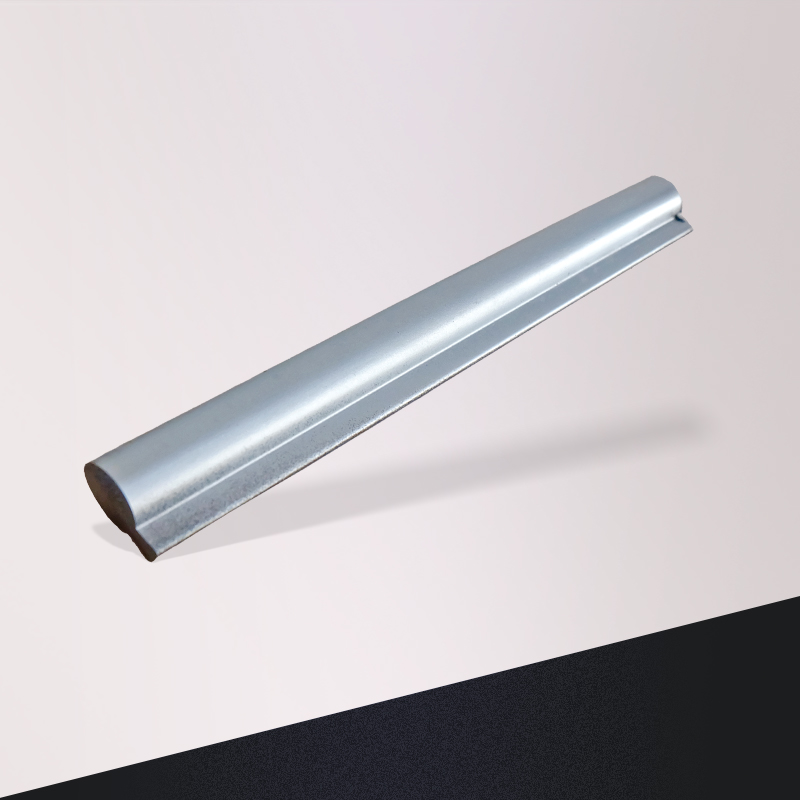
 Add wechat
 Contact us
 Telephone